


Kẹp giữ sợi Filament
 Bytinx_1344834Likes1.2KDownloads6K
Build another version of this model.
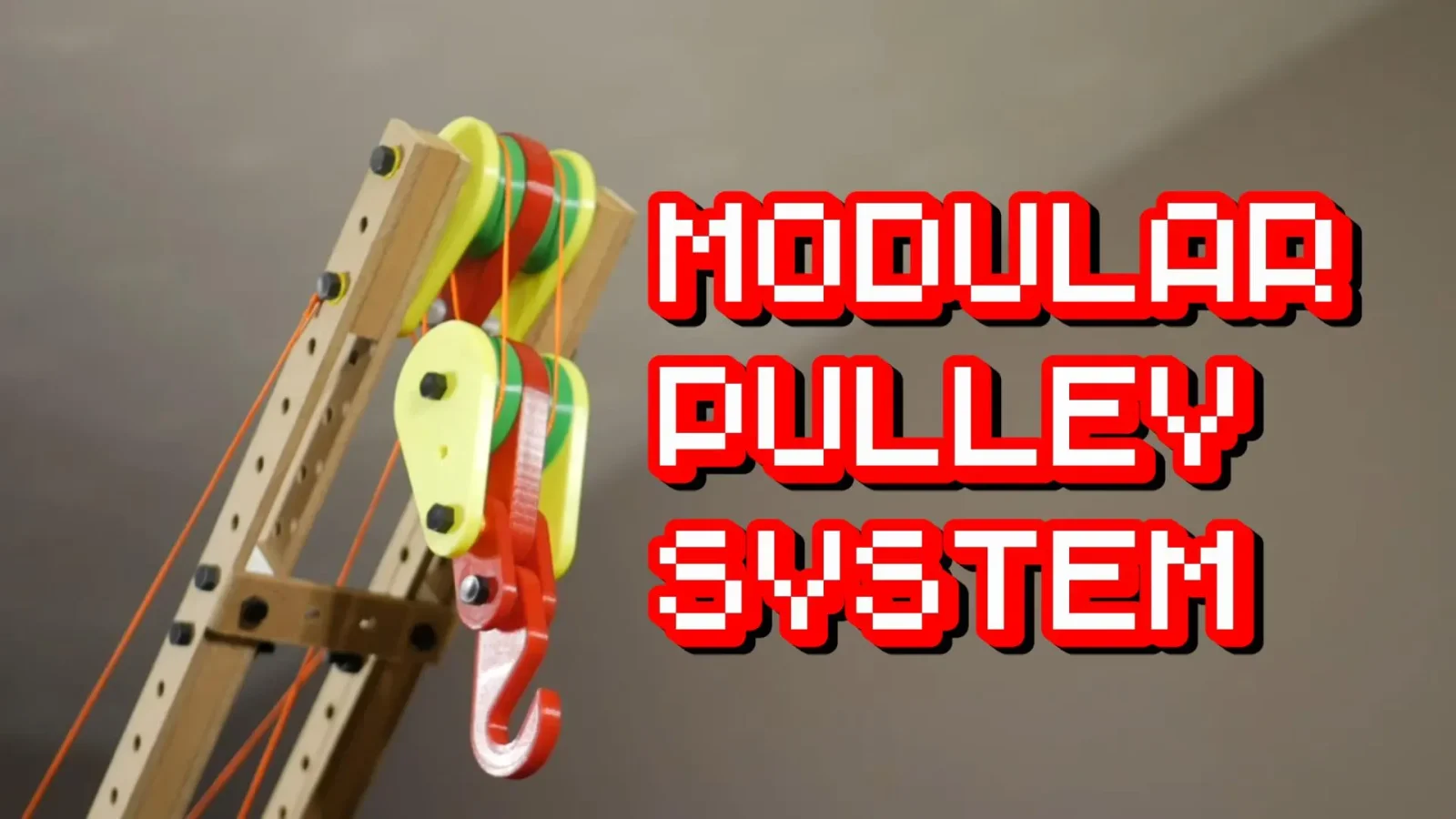
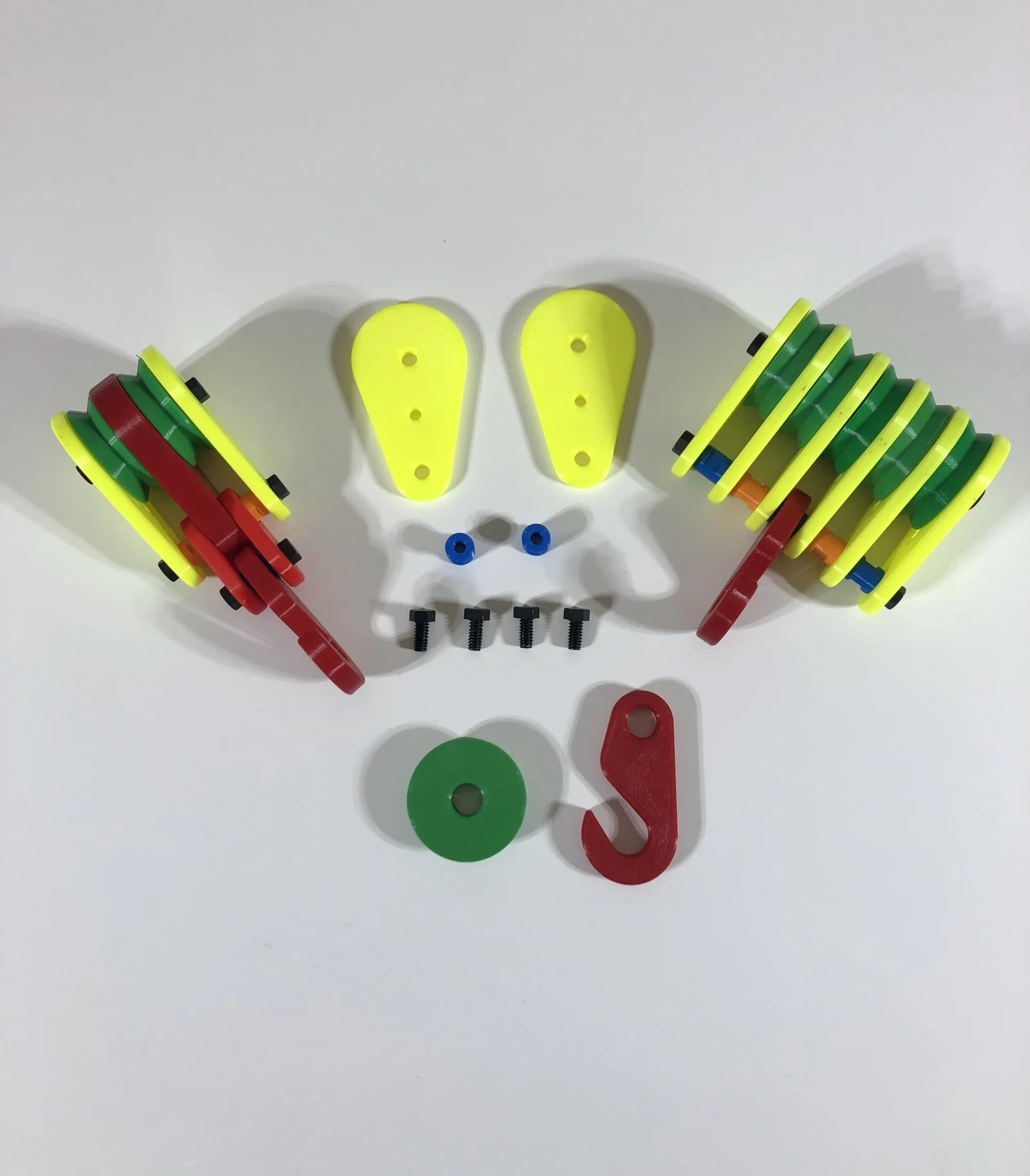
I have no design or engineering experience and cannot guarantee the safety of or recommend constructing this project. A project I call Building Blocks is designed for my nieces and nephews so that they could learn hard skills and test out theories while building a working mechanism. These parts can be put together to assemble pullies. They are part of a larger project I am working on where easily produced building blocks would allow for a wide array of mechanisms and structures to be accessible. I am making this project public in hopes that a wider community can be formed and humbly ask for any feedback you would be willing to provide. Thank you.
The system of building blocks has three main components.
3D printed blocks that I find are best printed using “0.15mm Quality” setting in PrusaSlicer. This produces acceptable tapped holes that will accept ¼"-20 bolts. Generic PLA is the filament that I use and it has more than met my needs. For strength purposes I use 4 perimeters and a 10% gyroid infill with 5 layers on top and bottom.
¼"-20 plastic bolts and nuts from McMaster-Carr. Though any ¼"-20 bolt would work, the plastic ones from McMaster-Carr work well and are the most affordable option I could find.
MDF planks that are 1 inch wide, 7/32 inch or ½ inch thick and variable lengths. Unfortunately, all the ¼ inch material options like plywood and MDF have a thickness of 7/32 inch. This is not the biggest problem as a 1/32 inch washer works “OK” when lining up parts but access to true ¼ inch material would be preferable. The planks have a 9/32 inch hole drilled on the midline starting half an inch in and spaced 1 inch apart. For every 1 inch in length, each plank would have one hole. The planks could be 3D printed however the cost in time seemed too much. A jig for drilling holes in the planks will be released as a separate project. Ripping MDF on a table saw into strips with width 127/128 inches worked well for me.
A booklet is included showing diagrams of how parts fit together.
Bytinx_1344834Likes1.2KDownloads6K

 Byprusa-researchLikes0Downloads2.7K

 Bypjs37Likes0Downloads155

 Bygafyx3dLikes0Downloads121

 Byduo3dprintLikes0Downloads152

 BylaserbaconLikes0Downloads171

 Bylk-3d-printsLikes0Downloads206

 ByswimLikes0Downloads108

 Byarhi_585078Likes64Downloads541

 ByleopoldmozartLikes0Downloads136

 By3d-mmakerLikes0Downloads114

 Bynadir-cn3dLikes0Downloads110