



New
Pocket Memory — SD & microSD Case | Print in Place
 By3dwakeLikes0Downloads362
Remix of Bộ Vỏ Case Đầy Đủ Cho Bàn Phím Split Sofle RGB By Hans_193091
Build another version of this model.
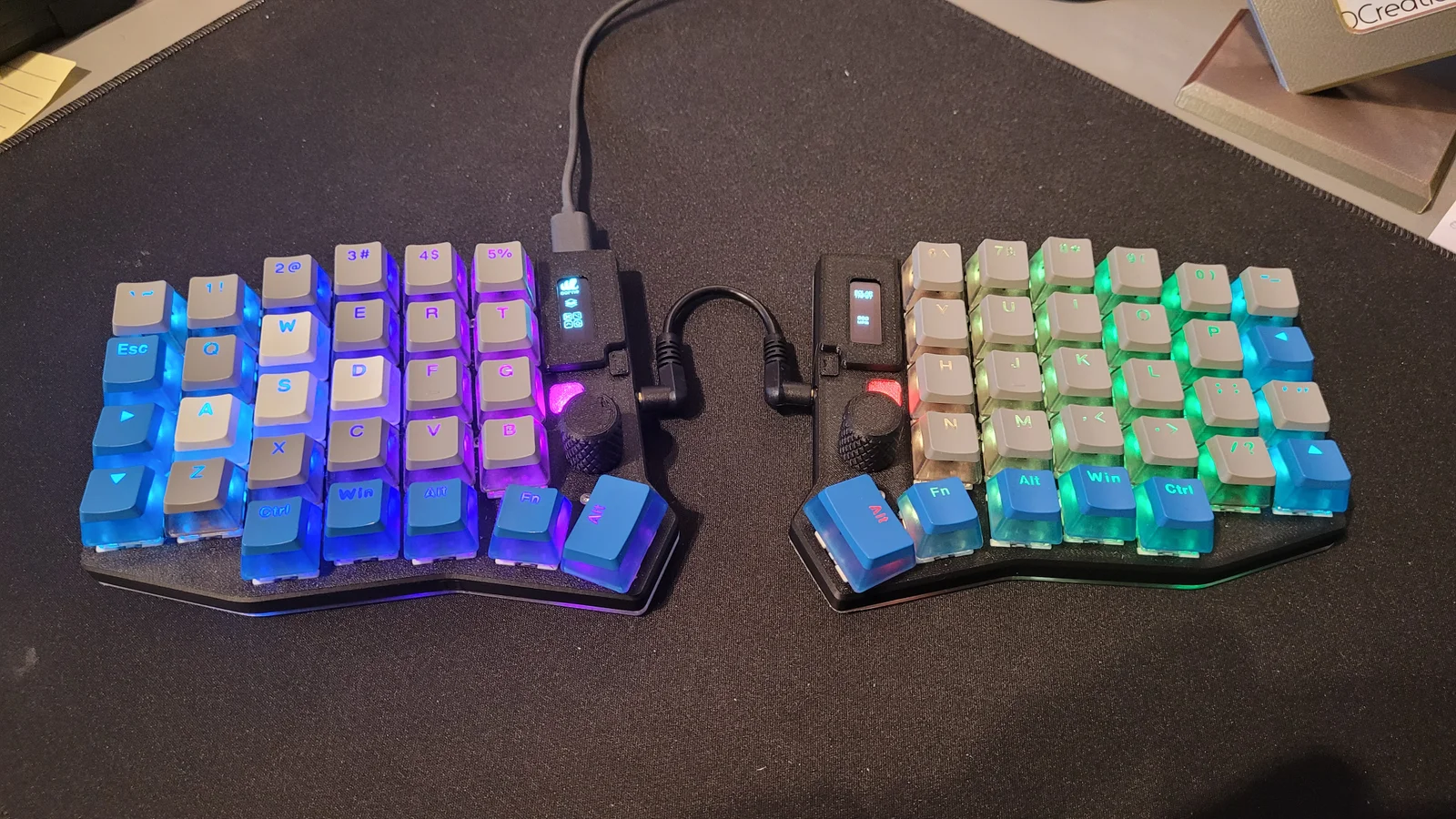
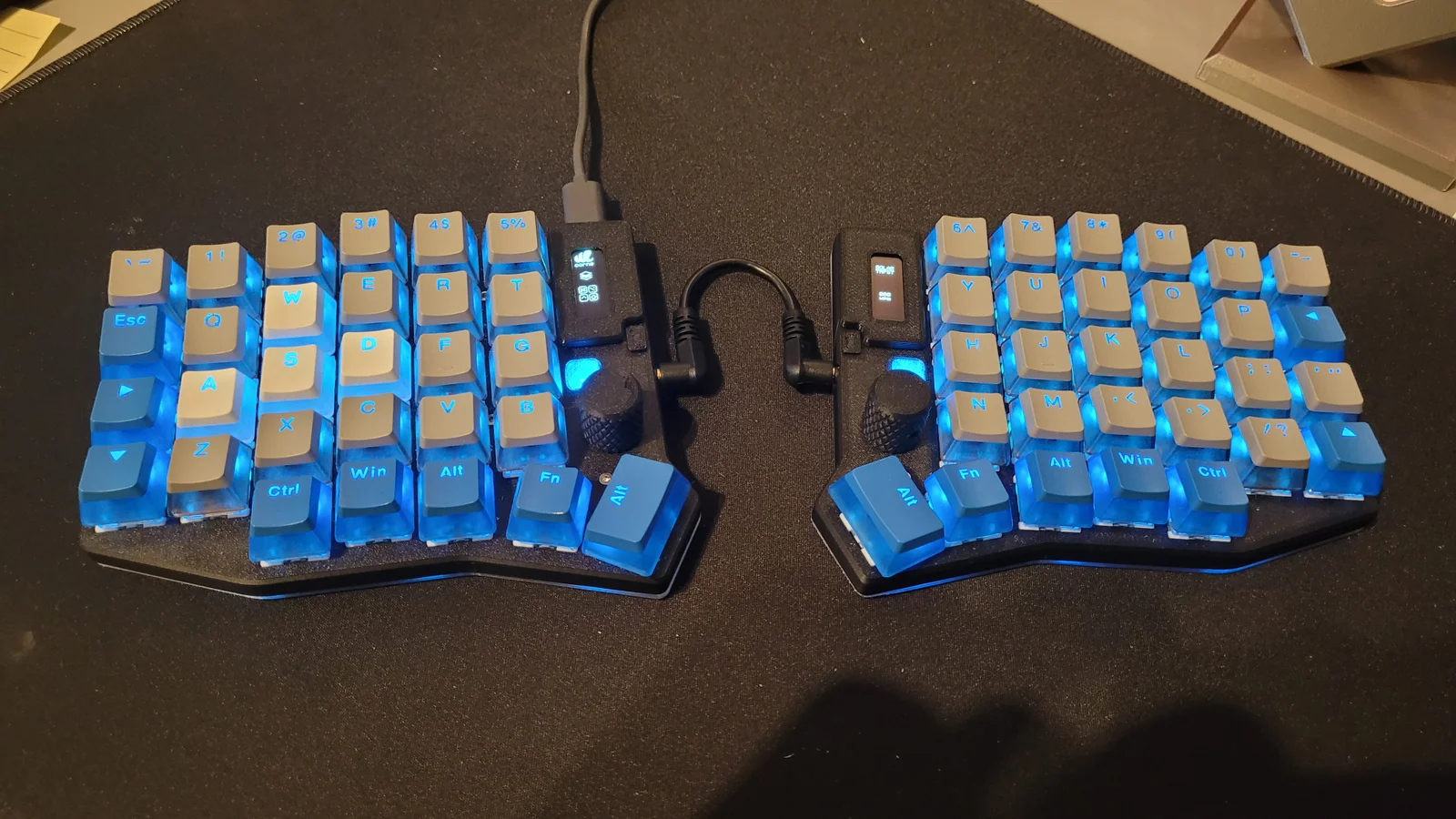
I really liked the original model, but after starting to print it I noticed it had a number of flaws or incompatibilities with my kit (https://a.aliexpress.com/_EHHvSdO), so I fixed it. This version works for sofle keyboards that use low profile headers for the microcontrollers, and full height headers for the oled screen
I didn't change the fact that the case needs 2x1 magnets, but be warned that they are painful to install, they are extremely light and attracted to anything metal, making assembly a mess. The original holes are also a bit oversized so magnets will not pressfit and be loose in their housing.
What I ended up using as my mounting process is as follows:
please test fit the oled covers before gluing magnets to them, so you can be sure the screens sit properly in the hole on the cover and don't push up because yours are too tall
you may have noticed that in my pictures there are holes for some round feet. It didn't work nicely enough for me since the slightest issue with the bridged portion of the feet hole would result in a wobbly keyboard, so I removed them from the design
I made almost from scratch a firmware for the Sofle keyboard using qmk and vial, you can find it at https://github.com/HitLuca/vial-qmk-sofle. Please note that it's not full of functionalities or super polished, but it works for me and I'll keep it updated if need arises. Feel free to message me for possible features regarding the software part
By3dwakeLikes0Downloads362

 BylclabLikes0Downloads290

 ByckthLikes148Downloads2.4K


 BynasikLikes0Downloads225

 Bylarp3dLikes0Downloads1.4K

 ByJaronLikes310Downloads1K

 Byw3rN42Likes127Downloads938

 Byrorys3DLikes0Downloads326

 ByAustin Wolt WoltLikes162Downloads382

 ByLecso_113752Likes76Downloads337

 Bytovelaermans_3355197Likes63Downloads429