



Pocket-Size Third Hand Mini Spring Loaded Vise
 ByrjunLikes0Downloads305
Build another version of this model.
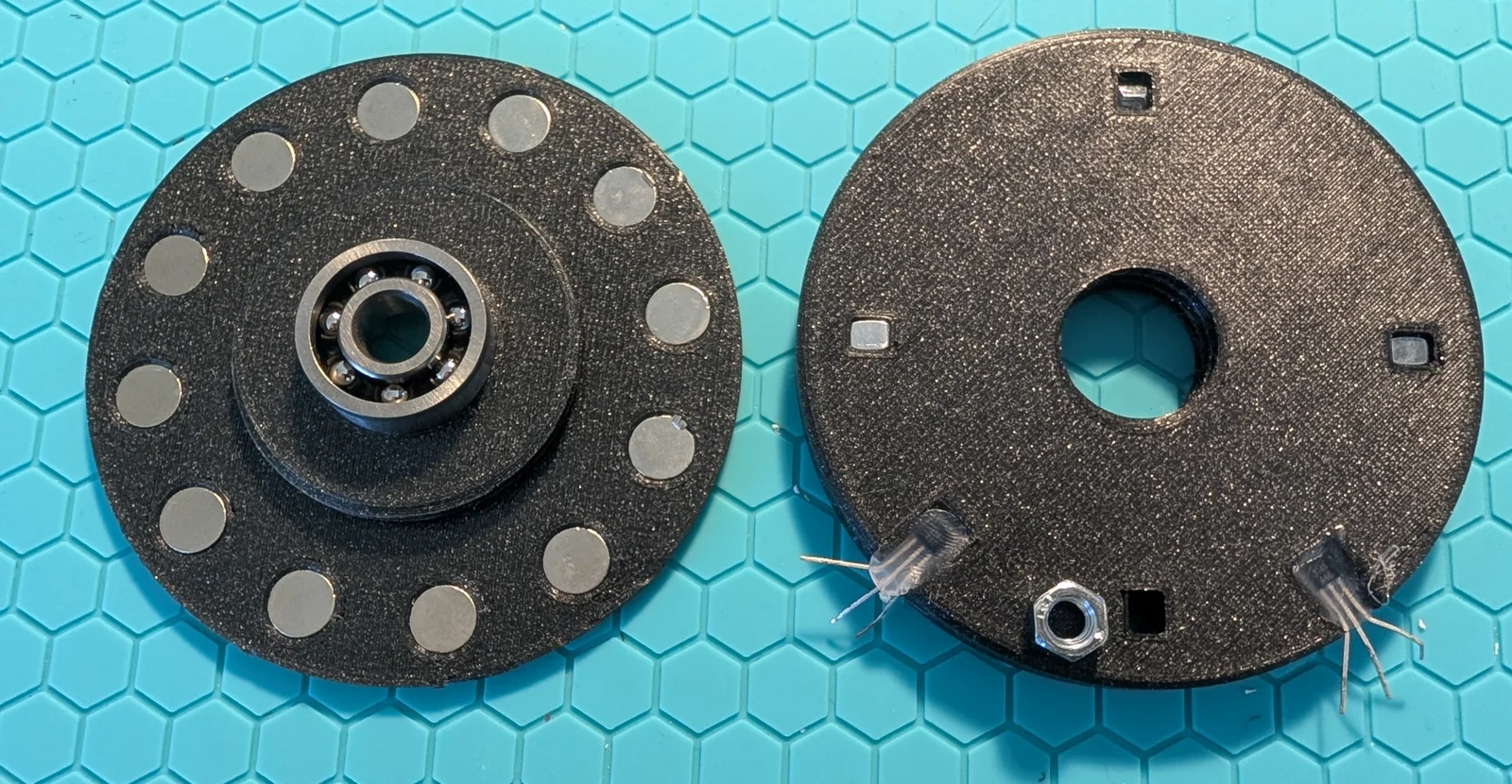
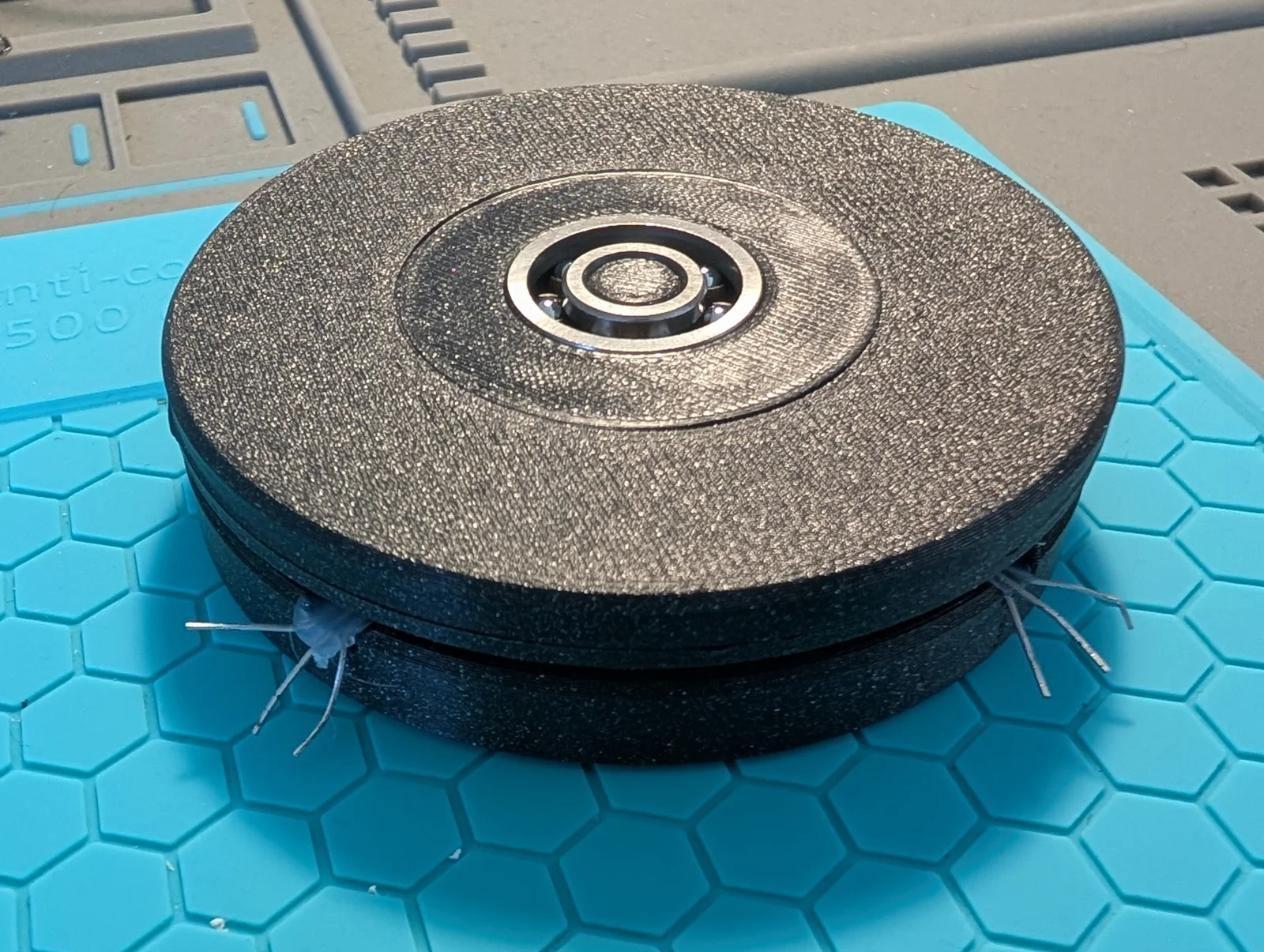
Most DIY encoders feel cheap and flimsy. This concept model was designed from the ground up to provide a heavy, premium tactile detent using opposing magnetic forces rather than grinding mechanical parts.
By utilizing a standard 608 bearing and dual A3144 Hall effect sensors, this encoder provides satisfying, wear-free feedback suitable for high-end custom hardware, sim-racing rigs, or audio equipment.
Bill of Materials (BOM):
1x Standard 608 Bearing
12x Neodymium Magnets (8x2 mm)
Standard M5 Nuts (acting as the ferromagnetic material for the detents)
2x A3144 Hall Effect Sensors
10k Pull-up Resistors
3D Printed Housing and Dial
The Engineering Deep Dive:
If you want to know why this works—including the physical geometry of the magnetic detents, the exact placement of the sensors, and the actual scoped signal traces proving the hardware generates clean quadrature logic before a single line of code is written—I wrote a complete teardown of the design process.
👉 Read the full architectural breakdown on Traces to Market
ByrjunLikes0Downloads305

 ByleonicLikes0Downloads1.4K

 ByZED4EverLikes313Downloads5.2K

 ByfifindrLikes500Downloads4K

 Bymrfixit_324954Likes65Downloads478

 Bylab-96Likes0Downloads106

 ByVC_DesignLikes679Downloads3.6K

 BymoonyxLikes0Downloads698

 ByDan Schwartz SchwartzLikes744Downloads3.4K

 ByBrokentooth_designsLikes83Downloads454

 Byvc-designLikes0Downloads3.2K

 Bythorin-oakenshieldLikes0Downloads532