


Kẹp giữ sợi Filament
 Bytinx_1344834Likes1.2KDownloads6K
Build another version of this model.
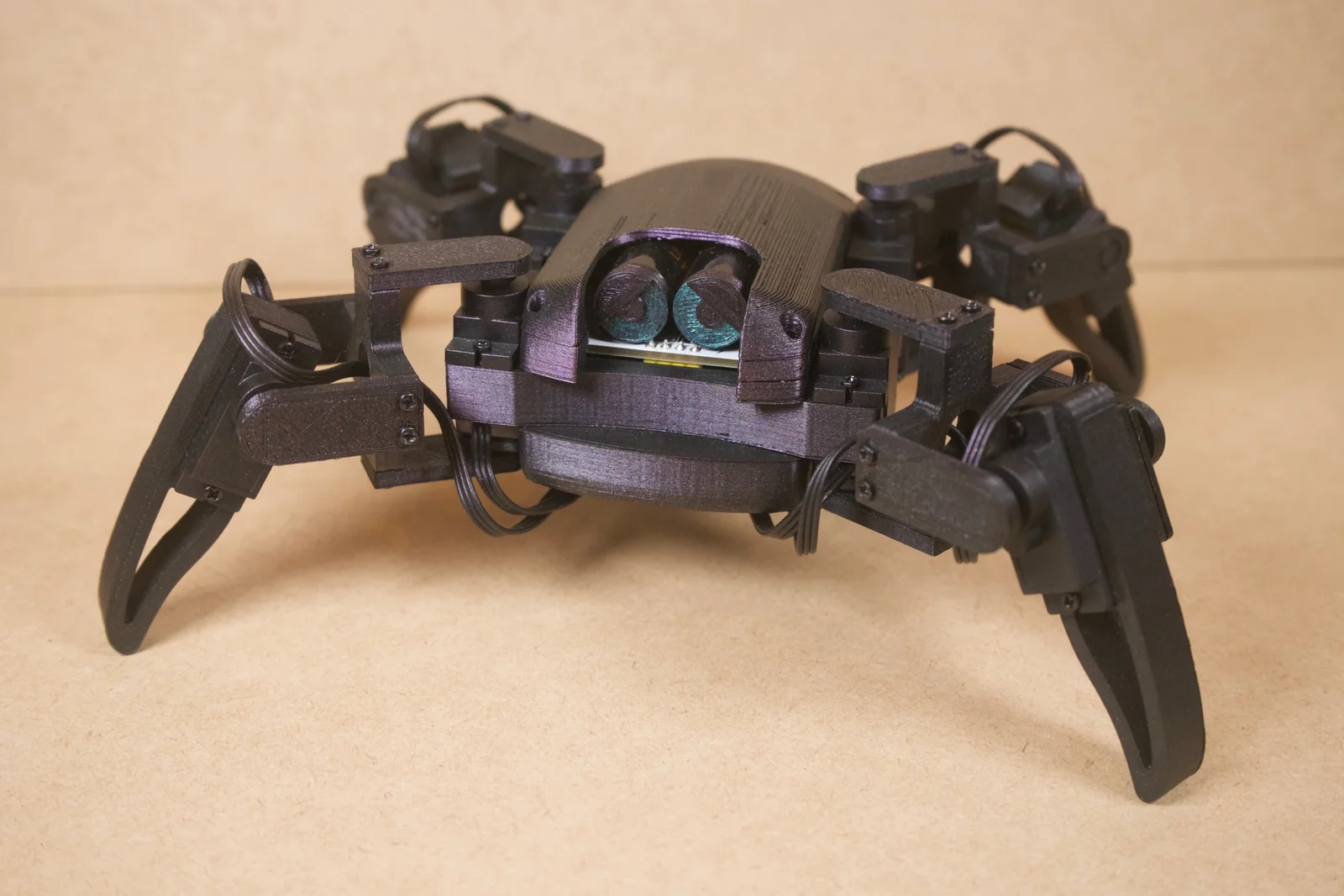
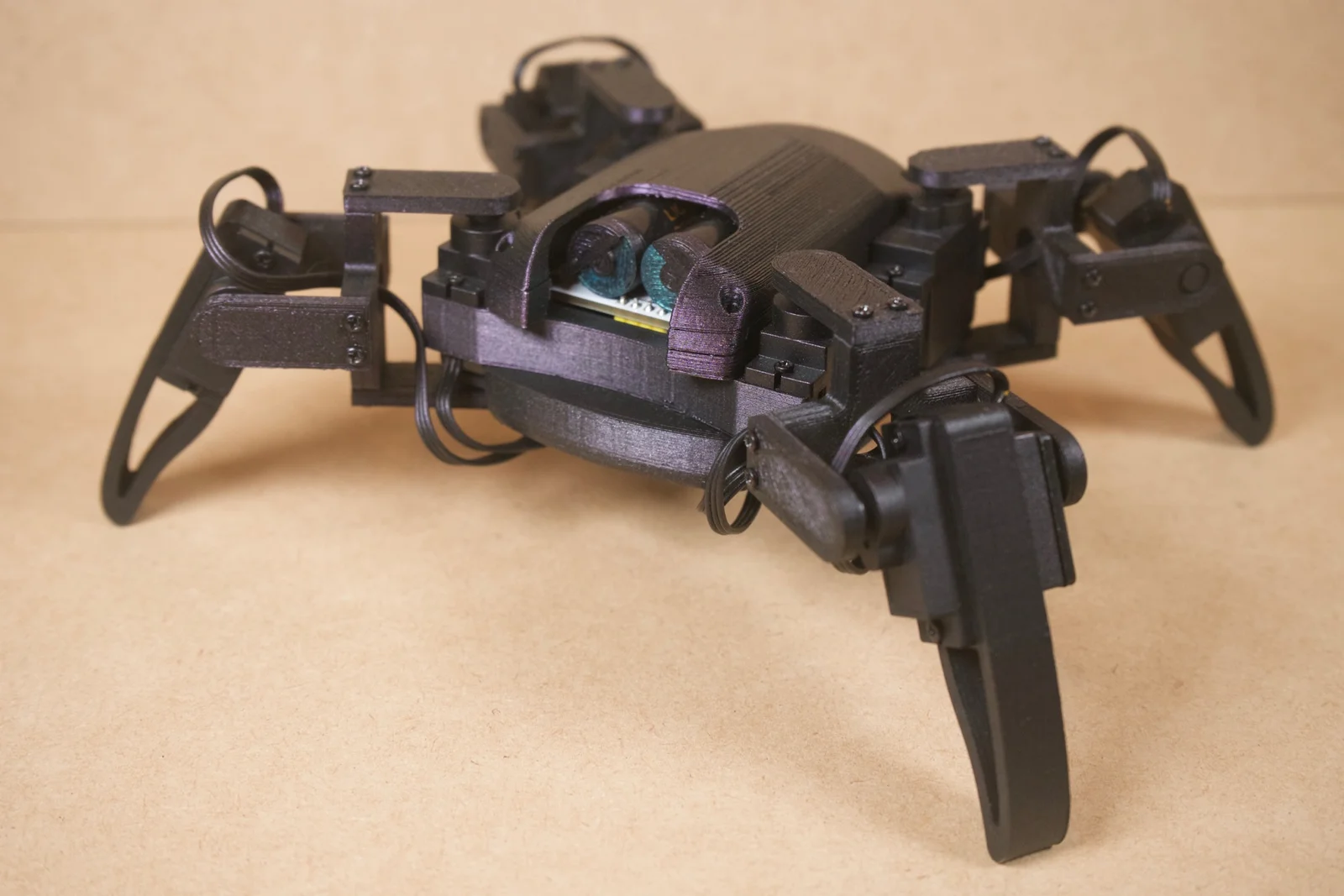
Spider Quadruped Robot | ESP32 Powered 8-DOF
This is an agile, 4-legged spider robot (quadruped) built for smooth movement and wireless control. By upgrading the classic frame with an ESP32, this build gains WiFi/Bluetooth capabilities, making it a perfect platform for remote-controlled walking, automated routines, or STEM learning.
The robot utilizes 8 servos (2 per leg) to achieve realistic "spider-like" articulation, including walking, rotating, and posing.
Brain: ESP32 Dev Board (Dual-core power for smooth servo coordination).
Movement: 8 Degrees of Freedom (8-DOF) using MG90S metal-geared servos for extra durability.
Power Management: Integrated MP1584 DC-DC Step-Down converter to ensure stable 5V delivery, preventing the "brown-outs" common in DIY robotics.
Connectivity: Capable of being controlled via a smartphone app or web interface (via ESP32).
Component
Quantity
Description
ESP32 Dev Board
1
Main MCU (WiFi + Bluetooth)
TowerPro MG90S Servos
8
High-torque metal gear servos (Hip & Knee)
3D Printed Parts
29
Total parts for frame and legs
M1.7 x 8mm Screws
~60
Self-tapping screws for mounting servos
MP1584 Converter
1
Buck converter (7.4V down to 5V)
18650 Li-ion Batteries
2
3.7V cells in series (7.4V Total)
Print Settings: I recommend PLA or PETG with at least 3 perimeters for joint strength.
Infill: 20% (Gyroid recommended for vibration resistance).
Calibration: Ensure the MP1584 is tuned to exactly 5V using a multimeter before connecting your servos or ESP32 to avoid damage!
Cable Management: Use small zip ties to route servo wires along the leg segments to prevent them from catching during movement.
The 3D geometry for this build is based on the fantastic design by RegisHsu. This version focuses on the electronics integration and power efficiency using the ESP32 ecosystem.
Bytinx_1344834Likes1.2KDownloads6K

 ByzooppLikes7Downloads170

 Byprusa-researchLikes0Downloads2.7K

 ByRyanLikes0Downloads236

 Bychukwufumnanya-arinzechukwuLikes0Downloads190

 Byemmanuel-garciaLikes0Downloads171

 Bycrawler-4460618Likes0Downloads173

 Bydet-manLikes0Downloads185

 Bygummiegecko8477Likes0Downloads178

 Bychris-barwickLikes0Downloads143

 BydalleLikes0Downloads162
