

New
Pocket-Size Third Hand Mini Spring Loaded Vise
 ByrjunLikes0Downloads304
Build another version of this model.
Magnetic PCB Standoff Feet – Modular Soldering & Rework Aid
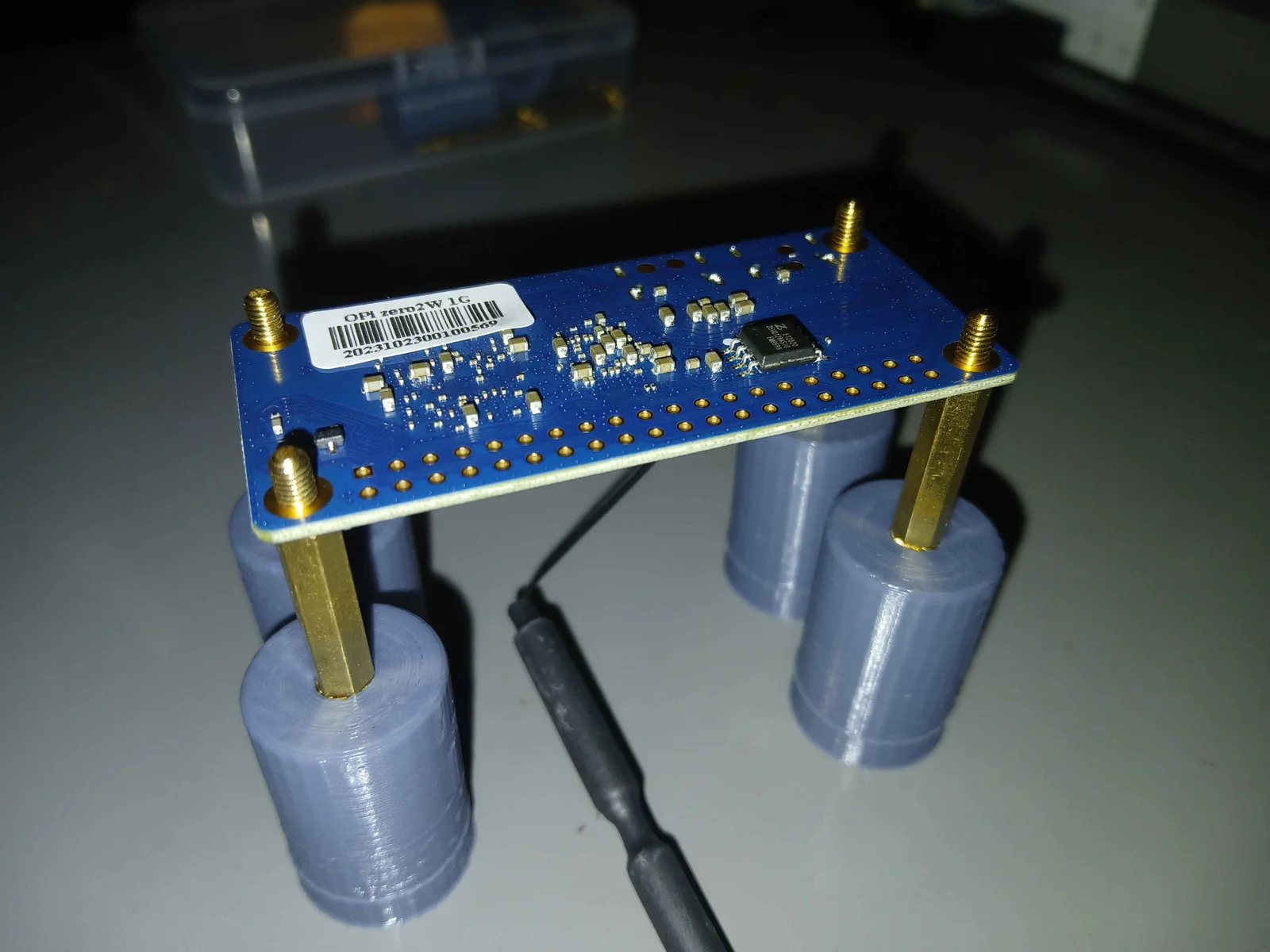
These magnetic PCB standoff feet are a stable, modular alternative to traditional “helping hands” for soldering, rework, and electronics assembly.
Instead of suspending a PCB with flexible arms and clips, this system gives your board real legs, creating a rigid, table-like setup that stays exactly where you put it. The result is a calmer, more predictable soldering experience — especially for through-hole work, connectors, and rework.
Designed for use on steel or magnetic work surfaces, such as a steel desk plate.
✨ Key Features
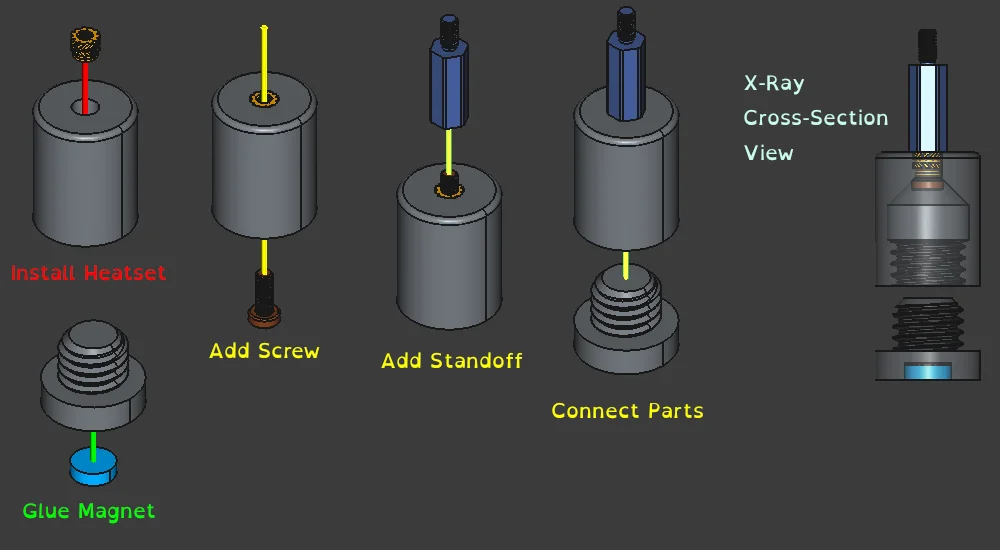
Magnetic base (Ø8 mm × 2.5 mm magnet)
Provides secure but easily repositionable placement on ferromagnetic steel surfaces.
Modular two-part design
A single magnetic foot works with multiple interchangeable top pieces.
Multiple topper options included
M2.5 topper (designed for heat-set insert)
M3 topper (designed for heat-set insert)
Blank topper (no hole) for full user customization
Rigid, non-springy support
Far more stable than gooseneck helping hands or clip-based holders.
Scales with board size
Use 2 feet for small boards, 4 or more for larger PCBs.
🧠 Design Details (Intentional Engineering)
The magnet is used only for retention, not for structural load.
All mechanical forces are carried through:
Metal screws
Metal PCB standoffs
This avoids common failure modes where magnets or glue are forced to carry shear loads.
Female threads: Standard 1/2″
Male threads: Standard 1/2″, scaled to 95% in X/Y and 100% in Z
This compensates for real-world 3D printing tolerances while preserving proper thread pitch and engagement.
Thread geometry is derived from FreeCAD’s Fasteners workbench, including proper lead-ins and chamfers for smooth engagement and reduced cross-threading.
The M2.5 and M3 toppers are designed for heat-set inserts, which:
Stabilize the screw
Prevent printed thread wear
Keep the standoff axis square
Improve long-term durability
However, heat-set inserts are not strictly required.
A blank topper is included so users can create any hole size they need
(this can be done directly in slicer software using a negative cylinder — no CAD skills required).
The M2.5 topper can also be used directly with an M4 screw without a heat-set insert for quick, insert-free setups.
🔩 Screw & Hardware Requirements (Important)
The mounting screw should have ~8 mm of threaded length
This allows it to pass fully through the topper and securely engage the female end of the PCB standoff.
Larger screws or larger standoffs may require longer screws.
Standard metal PCB standoffs are recommended for best rigidity.
Extenders are intentionally not included — using longer or stacked metal standoffs is simpler, stronger, and more reliable.
🧲 Required Hardware (per foot)
1 × Neodymium magnet
PCB standoff(s), length as needed
Screw with ~8 mm threaded length (or longer if required)
Adhesive for magnet (CA glue or epoxy recommended)
Optional: heat-set insert (for M2.5 or M3 toppers)
🖨 Printing Recommendations
Material: Anything Rigid (Not TPU).
Orientation: As provided
Supports: Minimal — only required for the magnet pocket
Infill: 20–40% is sufficient
💡 Best Use Cases
Through-hole soldering
Connector installation
Rework where board movement is unacceptable
Holding boards while wiring, probing, or inspecting
For best results:
Use these feet to support the PCB
Use magnetic helping hands only for wires and loose leads, not for board support
📌 Notes
Works best on ferromagnetic steel.
Magnets are intentionally modest in strength to avoid snap-to hazards and allow easy repositioning.
Designed to work with the realities of 3D printing, not against them.
ByrjunLikes0Downloads304

 ByleonicLikes0Downloads1.4K

 ByZED4EverLikes313Downloads5.2K

 ByVC_DesignLikes271Downloads756

 ByfifindrLikes500Downloads4K

 Bymrfixit_324954Likes65Downloads478

 Bylab-96Likes0Downloads106

 ByDan Schwartz SchwartzLikes744Downloads3.4K

 ByBrokentooth_designsLikes83Downloads453


 Byvc-designLikes0Downloads3.2K

 Bythorin-oakenshieldLikes0Downloads531