




Quả cầu tự tưới nước cho cây trồng
 ByfifindrLikes216Downloads604
Build another version of this model.
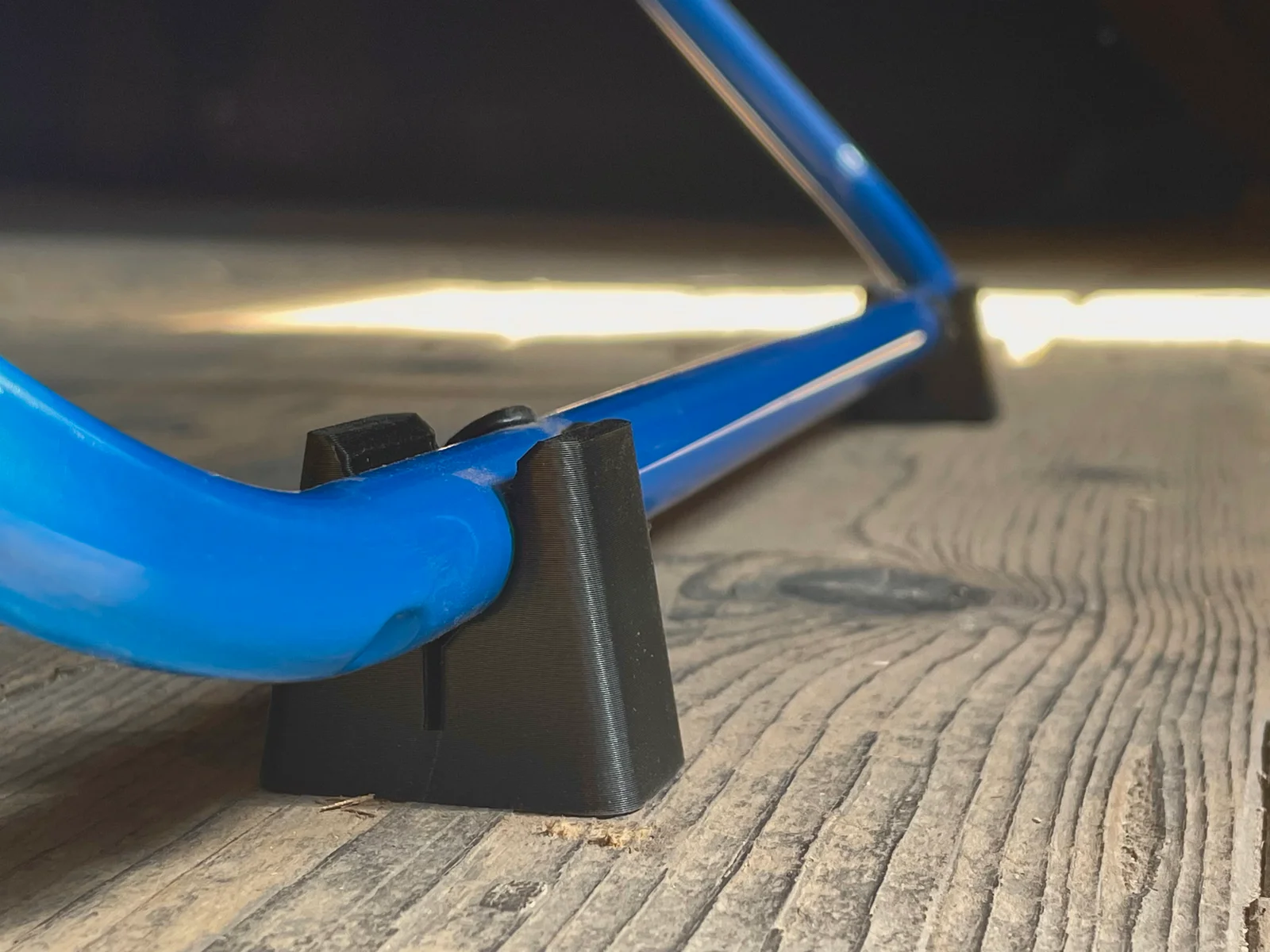
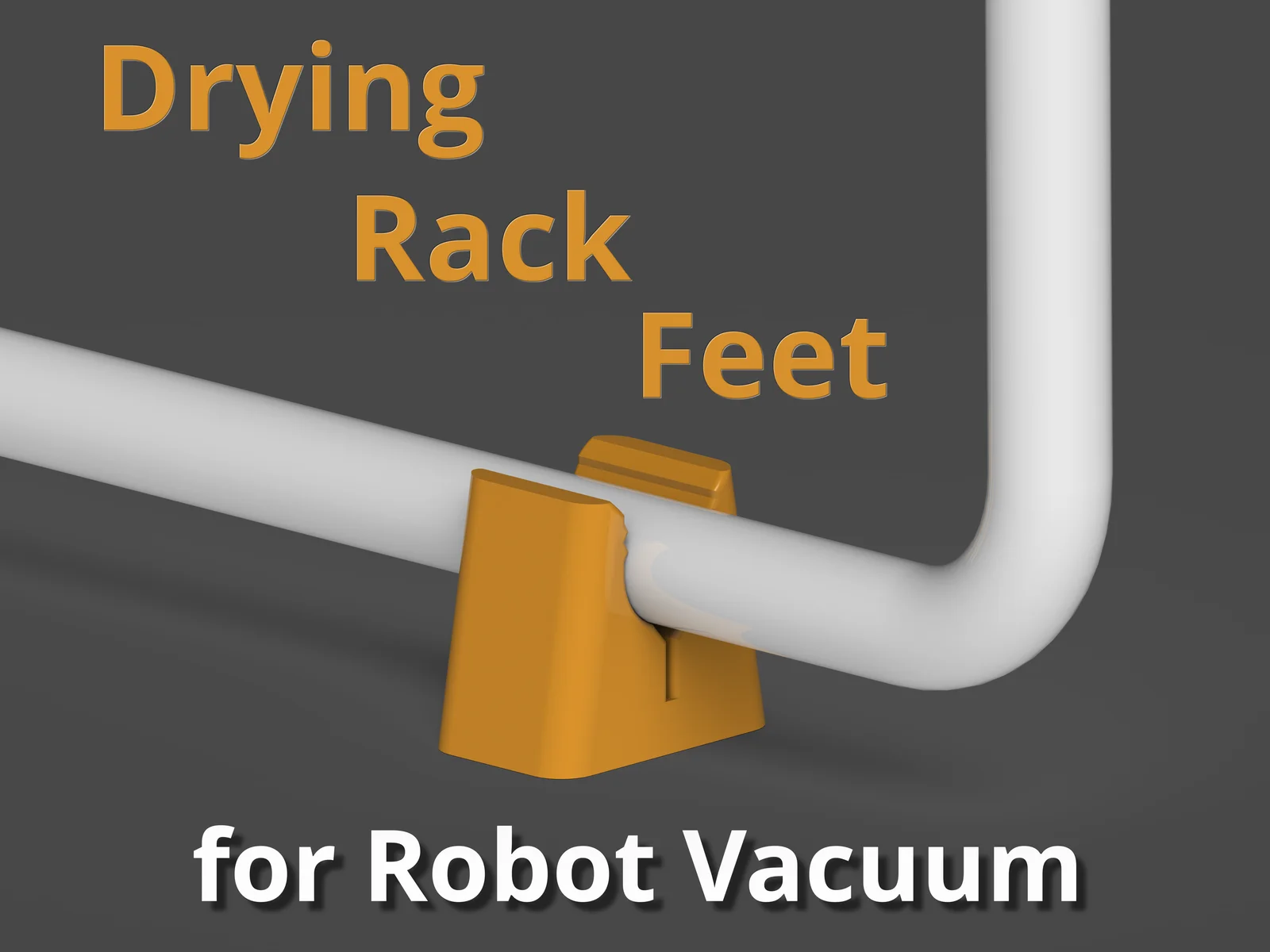
Durable feet to lift a drying rack, designed to prevent robot vacuums from getting stuck on the rack’s legs. These feet fit standard 16 mm drying rack legs (common size in Europe) and provide a stable and slightly elevated base.
The feet are designed to click into place.
Scaling them in the slicer for other leg diameters should be no problem. Just scale them by (x/16)*100%, where x is the diameter of your legs in mm (not yours specifically, the legs of your drying rack).
For moderate scaling factors this should not influence the tolerances by much and should work just fine.
The feet can be printed either standing upright or laying on their side, although standing orientation is recommended for best results and cleanest look. On the underside, ridges are integrated to make attaching felt gliders with hot glue easier, giving both a larger surface area and a form fit. This helps prevent scratches on hardwood floors, but the feet also work well without any felt pads.
There is also a version without these ridges, if you don't need/want them. This might make printing a slight bit easier on the printer, as there is no bridging required there. But bridging the ridges worked very well for me during testing and should be no problem for any printer. You can also use the “noRidges” version to attach gliders using super glue.
There is a picture of the version printed standing (left) and lying on the side (right) for you to compare.
You can print these in PLA. I have not tested PETG personally, but this should work just the same.
3–4 perimeters
15–20% infill (cubic recommended, but other infills also work)
1 mm bottom and top solid layers (3–5 solid layers for 0.3–0.2 mm layer height)
There is a ready-to-go project file with 4 feet with all the settings and 0.2 mm layer height. You can use this as a baseline and only change settings you want adjusted (such as printer or layer height).
ByfifindrLikes216Downloads604

 By178222178222_2484344Likes449Downloads1.7K

 ByMateuszTokarzLikes46Downloads300

 ByPavelBures_1259148Likes16Downloads56

 BybobmakesLikes2.5KDownloads17.5K

 Byquibeck_3353173Likes1.5KDownloads11.5K

 ByVaclav_ZahradkaLikes181Downloads1.2K


 ByowlartLikes527Downloads1.3K

 Bytjfenwick_306961Likes385Downloads1K

 ByAWSWLikes148Downloads580

 BympdesignLikes0Downloads220