
F3D

1 image

Thế Giới - Mẫu Scan 3D

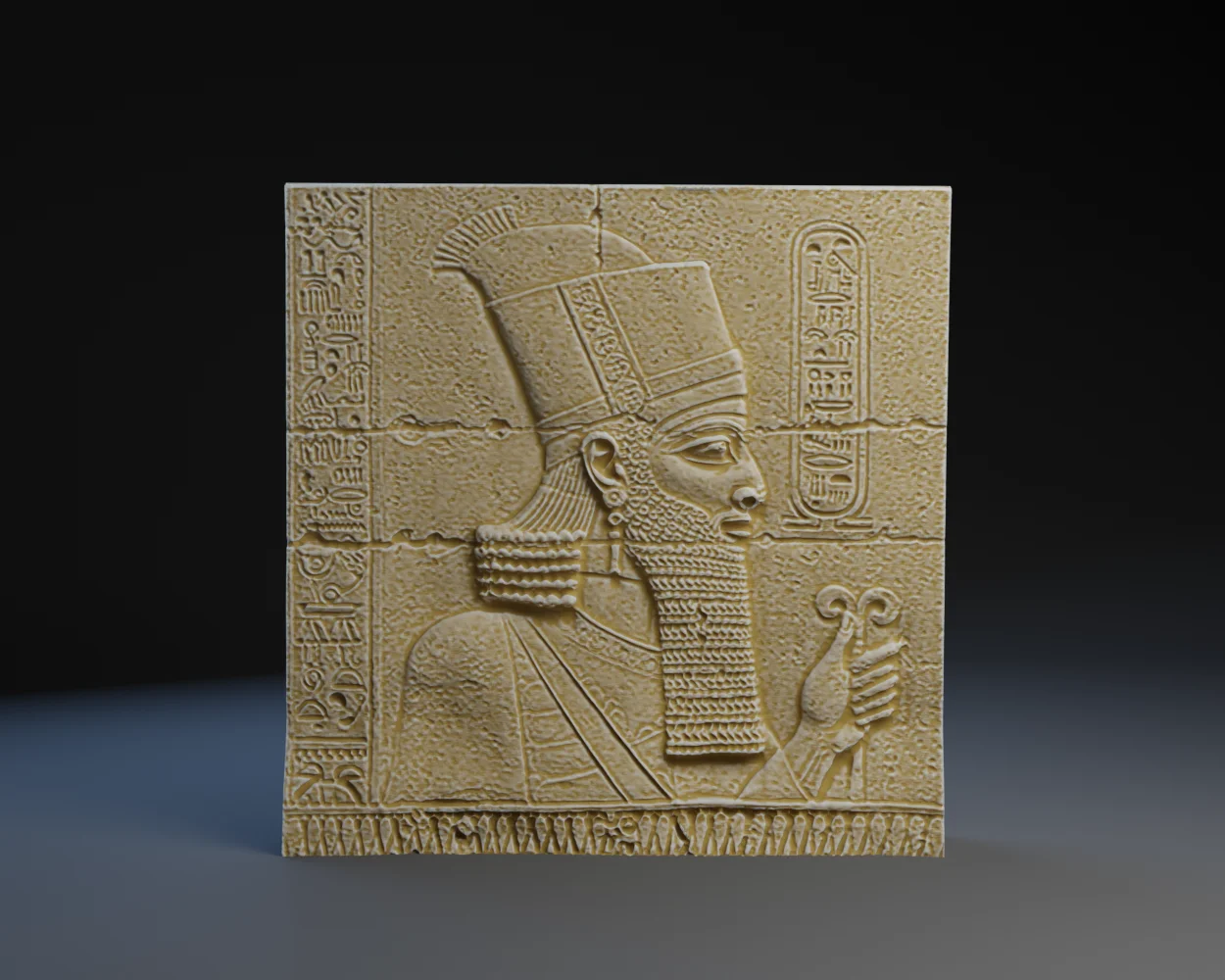
Phù điêu Sargon II (Sargon II Bas Relief)

By PeterFarell

Downloads
192
Likes
64
Views
635

Files 3 38.1 MB

  • sargon.II_1775109059.3mf3MF · 6.2 MB
  • sargon.II_1775109060.objOBJ · 18.2 MB
  • sargon.II_0.4n_0.2mm_PLA_MK4IS_7h18m_1775109063.bgcodeBGCODE · 13.7 MB

Make a variant with AI

Build another version of this model.

Open Studio

Description

Sargon II was a prominent king of the Neo-Assyrian Empire who reigned from 722 to 705 BC. He is considered one of Assyria's most successful rulers, known for his military prowess, administrative reforms, and ambitious building projects.   

Origins and Rise to Power:

  • Uncertain Lineage: Sargon II's parentage is not entirely clear. He claimed to be the son of Tiglath-Pileser III, but some scholars believe he might have been a usurper who seized the throne after overthrowing Shalmaneser V.   
  • "The Legitimate King": His name, Sargon (Sharru-kin in Akkadian), means "the legitimate king" or "the true king." This may have been a deliberate choice to assert his authority and claim to the throne.   

Military Achievements:

  • Expansion and Conquest: Sargon II significantly expanded the Assyrian Empire through numerous military campaigns. He conquered the Kingdom of Israel, subdued rebellious provinces in Syria and Palestine, and extended Assyrian control into parts of Anatolia, Media, and Urartu.   
  • Military Tactics: He was known for his effective military strategies and tactics, often leading his armies personally into battle. He employed siege warfare, deportation of conquered populations, and psychological warfare to achieve victory.   

Administrative and Political Reforms:

  • Centralization of Power: Sargon II further centralized the Assyrian administration, strengthening the authority of the king and streamlining governance.
  • Regency: He established the practice of appointing a crown prince as regent, ensuring a smoother transition of power in case of the king's death or incapacitation.   
  • Deportations: Sargon II continued the Assyrian policy of mass deportations, relocating conquered populations to different parts of the empire to prevent rebellions and maintain control.

Building Projects:

  • Dur-Sharrukin: Sargon II's most ambitious project was the construction of a new capital city, Dur-Sharrukin ("Fortress of Sargon"), near modern-day Khorsabad, Iraq. This magnificent city featured a grand palace, temples, administrative buildings, and extensive fortifications.   
  • Patron of the Arts: He was a patron of the arts and commissioned numerous sculptures, reliefs, and other artworks to adorn his palaces and temples.   

Legacy:

  • Forgotten and Rediscovered: Despite his achievements, Sargon II was largely forgotten after his death. His city, Dur-Sharrukin, was abandoned shortly after his demise, and his name rarely appeared in later historical records. He was rediscovered in the 19th century when archaeologists excavated Dur-Sharrukin, revealing the grandeur of his reign.   
  • Controversial Figure: Sargon II remains a controversial figure due to the brutality of Assyrian warfare and the policy of mass deportations. However, he is also recognized as a skilled military leader, an effective administrator, and a significant contributor to Mesopotamian culture and history.   

Sargon II's reign represents a high point of the Neo-Assyrian Empire. His conquests, reforms, and building projects left a lasting impact on the ancient Near East, and his story continues to fascinate and intrigue historians and archaeologists today.

Read more Show less

Print spec

Formats
3mfbgcodeobj
Model files
3
Total size
38.1 MB
Largest file
18.2 MB

0 comments

See all